

FREE ONLINE TOOL BY SONG SURGEON
Upload an audio file to estimate its musical key, including major or minor. Get a starting point for playing along, choosing a vocal key, or matching a sample to your music.
Sign in or confirm your email, choose a song, and read its estimated key here. No software installation is needed for this online finder.
Ready to transpose it? Explore Song Surgeon 6 or use the online key and tempo changer.
Loading the finder…
Create your free access or sign in.
Or continue with
Open the sign-in email from Song Surgeon and select Confirm email and sign in. Keep this tab open; it will update after confirmation.
Check your spam folder too. The link expires in 30 minutes.
ESTIMATED KEY
Check the result against the melody and chords. Relative major and minor keys can be easy to confuse.
FROM YOUR RECORDING TO A MUSICAL KEY
Use Google, Microsoft, Yahoo, or enter your name and email and confirm the link we send. No purchase or payment details are required.
Upload a supported recording and select Find Key. Use at least 5 seconds of music with a clear melody or chords, rather than a percussion-only introduction.
A result such as C major or A minor appears here. Each account can start up to 5 analyses in any 60-minute period.
The finder analyzes audio on the server. Uploaded files and temporary analysis copies are removed after processing; a cleanup job removes interrupted uploads. Your original file stays unchanged.
A musical key describes a tonal center and how the notes relate to it. In C major, C is the tonal center and the key is major. C minor has the same tonal center but a different set of scale relationships.
The finder returns a note name and major or minor. A flat symbol lowers a note by a semitone: B♭ is B-flat. On an equal-tempered instrument, names such as D♭ and C♯ refer to the same sounding pitch, even though the written names differ.
Relative keys are closely related. The C major and A natural minor scales share the same seven note names, but center on different notes. An automatic estimate can favor either when the harmony is ambiguous. Listen for where the melody and chords feel resolved before relying on the label.
Some songs change key. This tool gives one estimate from up to the first 3 minutes, rather than a timeline of key changes. If you want to identify a particular verse or chorus, upload an excerpt of that section with clear melodic or harmonic content.
WORK WITH THE KEY IN SONG SURGEON 6
Song Surgeon 6 for Windows and Mac combines key detection with pitch changes, tempo controls, and audio looping. Identify a recording’s key, move it into a more comfortable singing range, and repeat a passage while you practice.
Key detection and key changes are included in Basic, Standard, and Pro. Compare the Song Surgeon 6 features to choose the edition that fits your workflow.
The desktop demo provides 4 hours of use. This online key finder is a separate free tool.
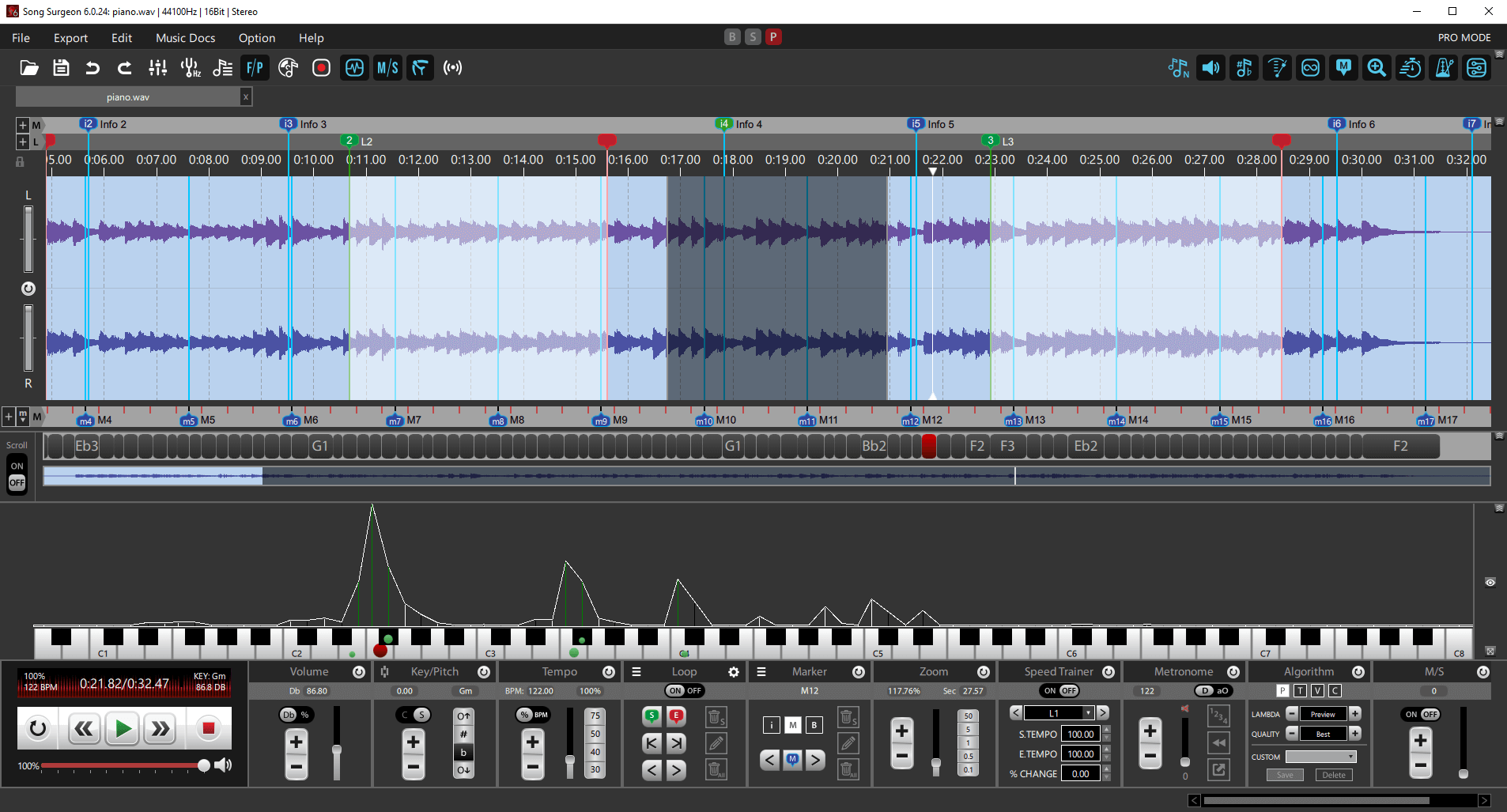
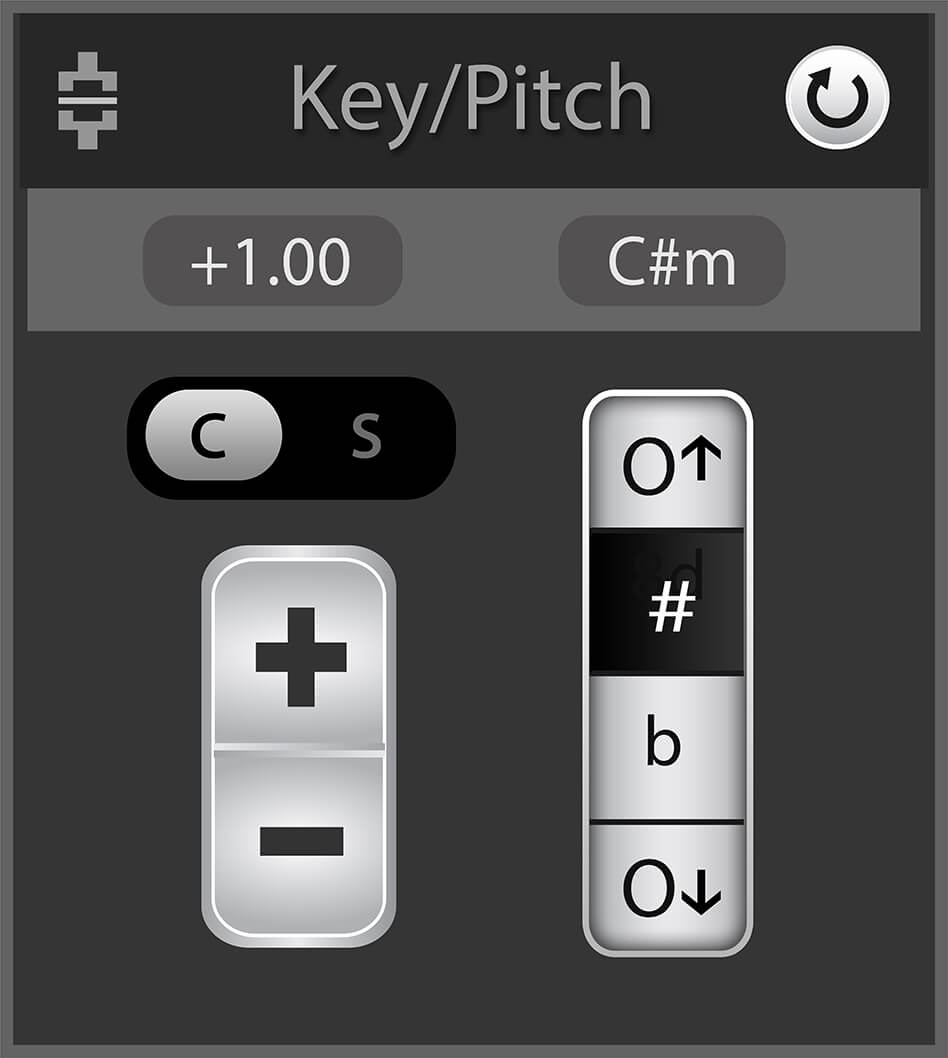
If a recording is in C major and D major suits your voice better, moving the whole track up two semitones transposes it to D major. Song Surgeon’s audio pitch changing tools help you make that adjustment.
Transposing moves all pitches together. It does not turn a major-key arrangement into a minor-key arrangement or correct individual sung notes. Preview the change against your voice or instrument before settling on a practice track.
For a browser-based adjustment, try the online key and tempo changer, which has its own usage terms. To find the speed separately, use the free Song BPM Finder.
Yes. Sign in and start up to 5 analyses in any 60-minute period at no charge. An analysis slot becomes available again when its earlier use falls outside the last hour. No paid Song Surgeon license is required.
The form accepts an audio file from your device. It does not accept streaming links or search a catalog by song title. Upload the actual recording you want to analyze.
The result is an estimate. Sparse melodies, percussion-only audio, unusual tuning, relative major/minor relationships, and key changes can make it less reliable. Compare the suggested key with a section that has clear chords and a stable tonal center.
This online form returns one estimated major or minor key. It does not create a chord chart, identify every note, or provide a key-change map.